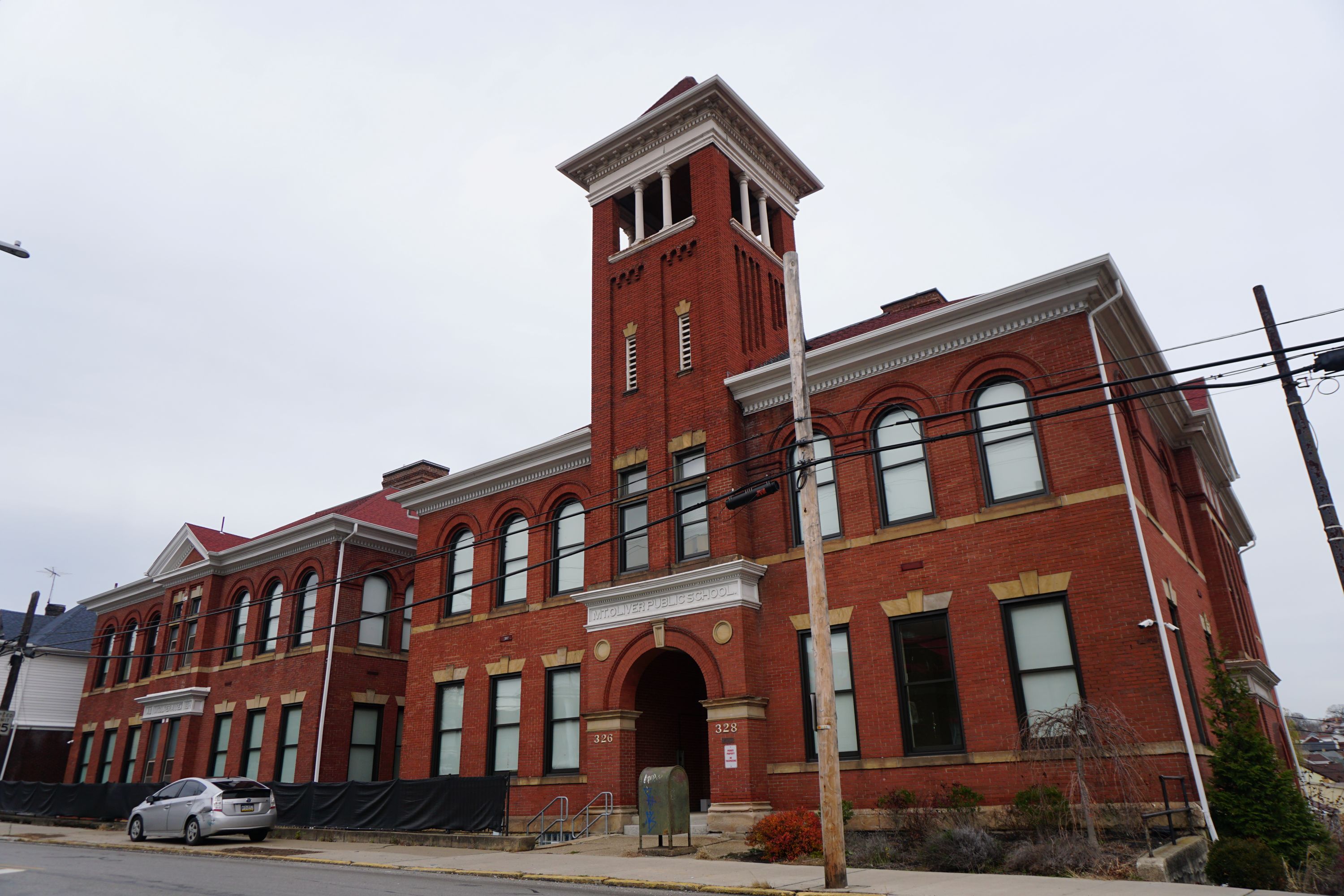
The Auberle Family Healing Center
The Auberle Family Healing Center (FHC) is a first-of-its-kind program in the nation taking an innovative and holistic approach to treating families affected by addiction.
Rather than sticking to the status quo of addiction services and separating caregivers and children, the FHC creates a safe space for all family members to heal — together.
FHC Eligibility, Services, & More
Interested? Speak with your CYF caseworker. All referrals must be submitted through CYF. Referral Contacts: Sandy Haluka at Sandy.Haluka@AlleghenyCounty.US and Rose Ann Hill at Rose.Hill@AlleghenyCounty.US.
Questions? Call the Auberle Behavioral Health team at 412-267-5260 ext. 1753.
The Auberle FHC is a 24/7 Drug and Alcohol residential treatment program for parents involved with Children, Youth & Families (CYF) who are ready to start their recovery journey while reconnecting with their children.
As a licensed Level 3.5 facility, The Auberle FHC offers intensive, trauma-informed treatment in a safe, family-focused setting. Here, families heal together. Children and support persons can live onsite with the parent in fully furnished apartments—supporting both recovery and reunification.
A Drug and Alcohol Level 3.5 is a clinically managed, high-intensity residential program that provides 24/7 care in a structured environment. You will live at the facility full-time and participate in daily therapy, parenting support, life skills groups, recovery planning, and mental health services. Because the program is designed for stabilization and healing, clients are not permitted to leave the facility without staff approval, and unidentified or unapproved guests are not allowed. These guidelines help ensure a safe, focused, and supportive space for your recovery and your family’s progress.
2. Can a support person live with me during treatment?
Yes. At the Family Healing Center, our program is designed to support family healing and reunification. Children may reside with you during treatment, and you may also be eligible to have a support person (such as a partner, grandparent, or caregiver) live with you in your family apartment. These decisions are made on a case-by-case basis, in collaboration with your CYF caseworker and the FHC team, to ensure that all individuals residing on-site contribute positively to your recovery and your child’s wellbeing.
3. How long will I stay in the program?
Length of stay is based on your individual treatment goals and plans. Most clients remain in the program for at least 4 months, with some staying longer depending on their progress and reunification goals. We focus on providing the time and support you need for lasting healing.
4. Will I still have visits with my child if they can’t live with me at FHC?
Yes. We provide supervised visitation and therapeutic family sessions to help rebuild the parent-child relationship. These visits are coordinated with CYF and your treatment team to support reunification goals.
5. What does a typical day at FHC look like?
Each day includes 5 to 6 hours of structured treatment, 7 days a week. Services include therapy, parenting classes, life skills groups, and community-building activities. Our Youth Room is open Monday–Friday from 9 AM–4 PM so you can focus on your recovery while your child is cared for in a nurturing space. We also provide youth programming to support child development and family healing. Lunch and dinner are provided Monday–Friday, helping to ease daily responsibilities and create a shared family routine.
6. What kind of support will I receive while I’m there?
You’ll be supported by a multidisciplinary team that includes therapists, case managers, peer recovery specialists, and psychiatric providers. Services include individual and group therapy, parenting education, housing and benefits support, recovery coaching, and aftercare planning.
7. Can I have my phone and other technology while I’m in the program?
Personal phones and electronic devices are not permitted for daily use during your stay. However, these items can be brought to the facility and will be safely stored by staff in a locked area. Devices may be used to make approved phone calls or access important information during designated times, with staff supervision and treatment team approval.
8. Will I be able to leave the facility for appointments or family needs?
Yes, but outings and appointments must be coordinated through your treatment team. Your care team will work with you to schedule these appropriately, supporting your outside responsibilities while keeping your recovery on track.
9. Can I work or go to school while in the program?
No, you cannot work while in treatment. However, once you are stable and if it aligns with your treatment plan and goals, you can pursue educational opportunities such as obtaining a GED during treatment. We also offer many resources to prepare clients for obtaining employment once they are discharged, which will be incorporated into your aftercare plan.
10. What happens after I leave the program? From day one, we work with you to build a discharge and aftercare plan that supports long-term success. This may include referrals to outpatient therapy, housing programs, parenting support, and continued recovery services. Our goal is to help you transition with confidence and the tools you need to thrive.